The year on the ground
Hesiod, of Askra, writes Works and Days for a brother who has taken more than his share. The poem is advice, lawsuit, and calendar. When the Pleiades, daughters of Atlas, are rising, begin the harvest. Plough when they are setting. Forty days and nights they are hidden. Then they show again as the year turns.
This is not a thesis about hydrogen. It is a field instruction. A cluster that can be lost in the Sun and found again is a clock a farmer can use without a bureau.
ASTRONOMY
The cluster
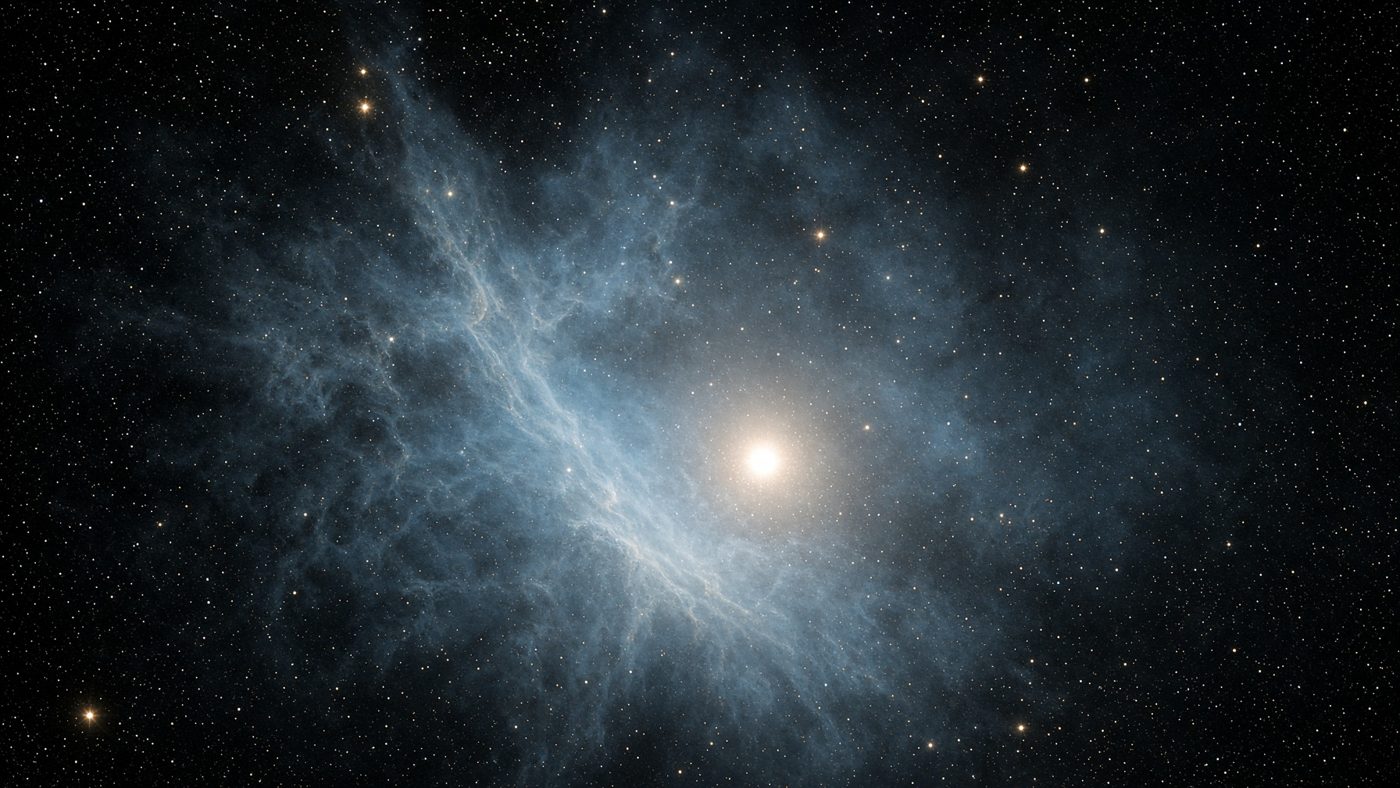
The Pleiades are an open cluster in Taurus, about 440 light-years away. Hesiod could not know that. He could know recurrence: they rise, they set, they vanish, they return. The light on his eastern hills had already been travelling for centuries. That sentence is ours.
Question
What kind of year is a cluster you can lose in the Sun?