The leaving
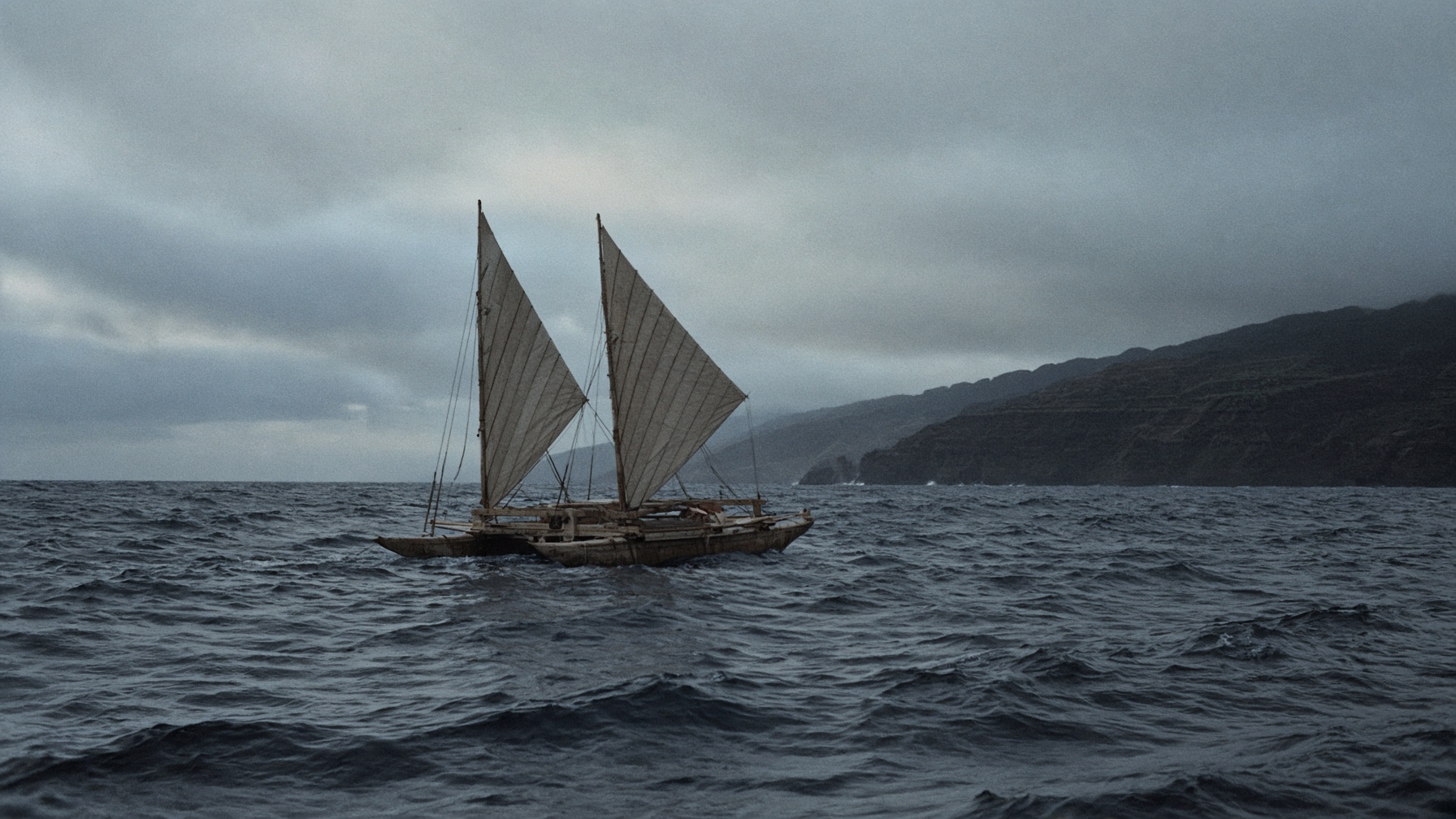
On 1 May 1976 the voyaging canoe Hōkūleʻa left Honolua Bay, Maui, bound for Tahiti. Pius Mau Piailug navigated. No sextant. No chart drawn for this crossing. No GPS.
Captain Elia David Kuʻualoha “Kawika” Kapahulehua commanded the canoe. The Polynesian Voyaging Society had launched her the year before, on 8 March 1975, as a performance-accurate waʻa kaulua. The crossing was to test whether the Pacific had been crossed on purpose, by people who knew, not by drift.
The navigator
Mau was a master navigator from Satawal, in the Caroline Islands of Micronesia. For the 1976 crossing, the Polynesian Voyaging Society said there was no traditional navigator from Hawaiian culture left who could guide the voyage. They turned to Mau, who carried a living Carolinian navigational tradition.
He read stars, winds, waves, clouds, birds, and the living ocean. He had not sailed this southern crossing before. The knowledge was Carolinian. The canoe was Hawaiian. The gift moved through one person and one hull. It was not a merger of cultures into one Pacific star lore.
EVIDENCE
Landfall
After more than thirty days she made landfall at Mataiva, in the Tuamotus, on 1 June 1976. On 4 June she entered Papeʻete Harbor. More than 17,000 people were there.
Mau did not navigate the return. He went home to Satawal. The canoe came back to Hawaiʻi with Western instruments: compass, charts, sextant. Contemporary record, including the Hōkūleʻa article now on Wikipedia, attributes this to a conflict among the crew that became violence. The Polynesian Voyaging Society’s own history of 1976 does not dwell on that night. The outbound crossing remains his.
ASTRONOMY
The star
Hōkūleʻa, in Hawaiian, is the Star of Gladness. The name is given to Arcturus, α Boötis, a K-type giant about 36.7 light-years away, apparent magnitude about −0.05.
The canoe is named for the star. The star did not steer. A person did, using a sky he had been taught to read, among other signs that are not stars: ocean swell, birds, the color of water, the shape of cloud.
Later
In 1980 Nainoa Thompson navigated Hōkūleʻa to Tahiti and back. That is another chapter: a Hawaiian star compass, taught after Mau’s gift, not identical with it. The 1976 night on the water remains Mau’s, and the crew’s, and the canoe’s.