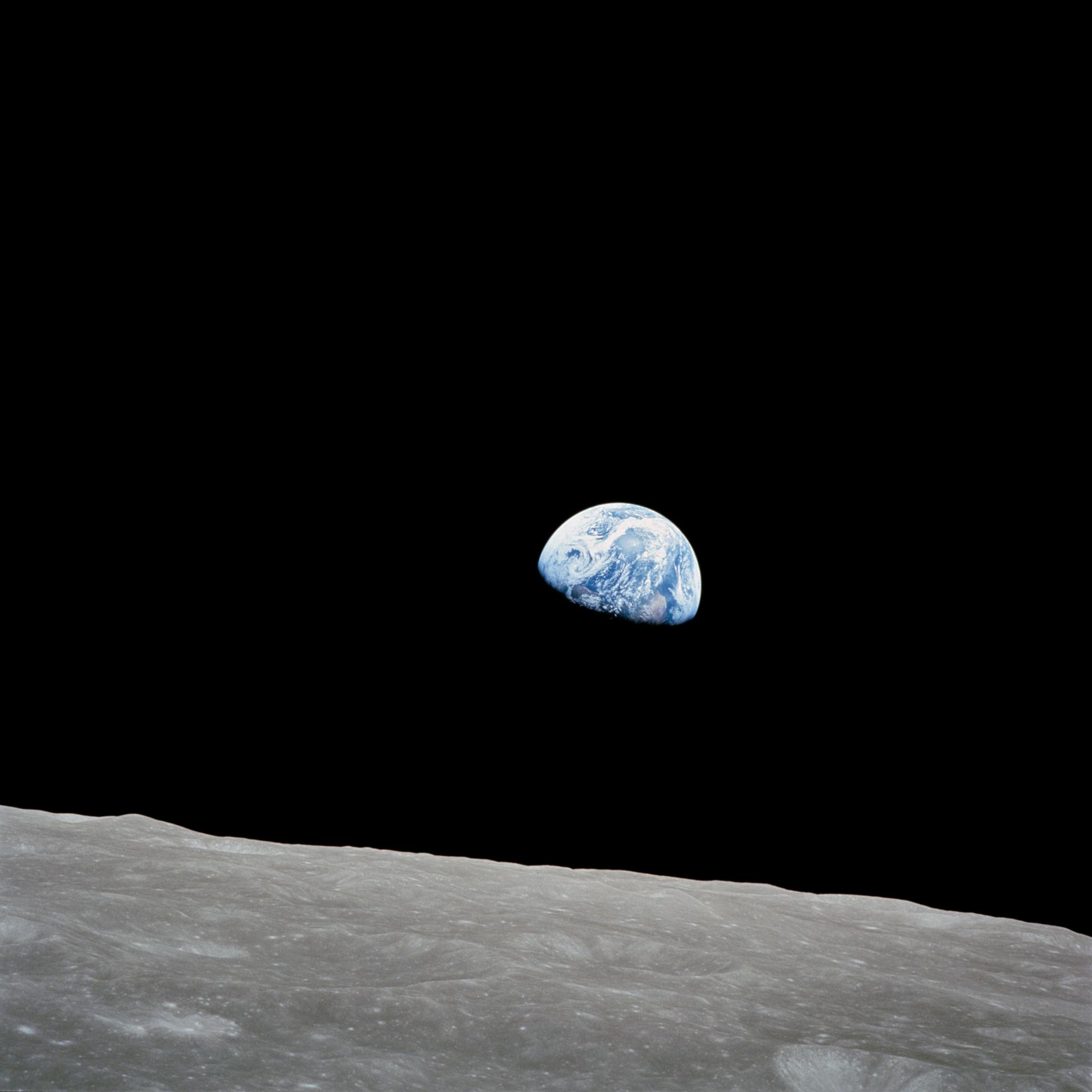
Apollo 8 leaves on 21 December 1968. Frank Borman, Jim Lovell, William Anders. First people to go to the Moon and around it.
In the command module there is a scanning telescope and a 28-power sextant, part of the guidance and navigation system. Lovell takes star and horizon sightings. The machine thinks it knows where it is. The star is how he checks.
ASTRONOMY
A space sextant still needs catalogued stars. The method is the marine one moved off the sea: two lines of sight, an angle, a clock. This is not Polynesian wayfinding and not Voyager’s star tracker. The recurrence is the need: a distant light as a reference for a traveler.
ANALOGY
A navigator at sea and an astronaut in a cabin are not the same office. Both ask a distant light: where am I pointed?
Question
When the destination is another world, why does the path still need a star?